
A restaurant’s owner opens the monthly P&L examines sales, then jumps to the bottom line, and then closes the P&L.
Sound familiar?
If only those two numbers are scrutinized, the report’s true value is lost.
A well-designed restaurant bookkeeping system won’t make it more dependent on owners on accountants. They should be more comfortable with their own numbers. You don’t need to be an expert in accounting, or to spend in the dark completing invoices. You should know how profit has changed and what’s happened to food and labor costs, and what questions should be addressed in the coming week.
Bookkeeping Chef is a computer program that makes bookkeeping easier, meaning the owners can focus in other activities while receiving more clear financial reports.
You Should Start By Looking at Weekly Numbers and Not just Month-End
A monthly P&L is crucial, but restaurants don’t operate monthly. Managers schedule labor for this week. The chef is ordering food today. Vendors change prices now.
This is the reason Bookkeeping Chef provides weekly prime-cost flash reports, along with monthly financial statements.
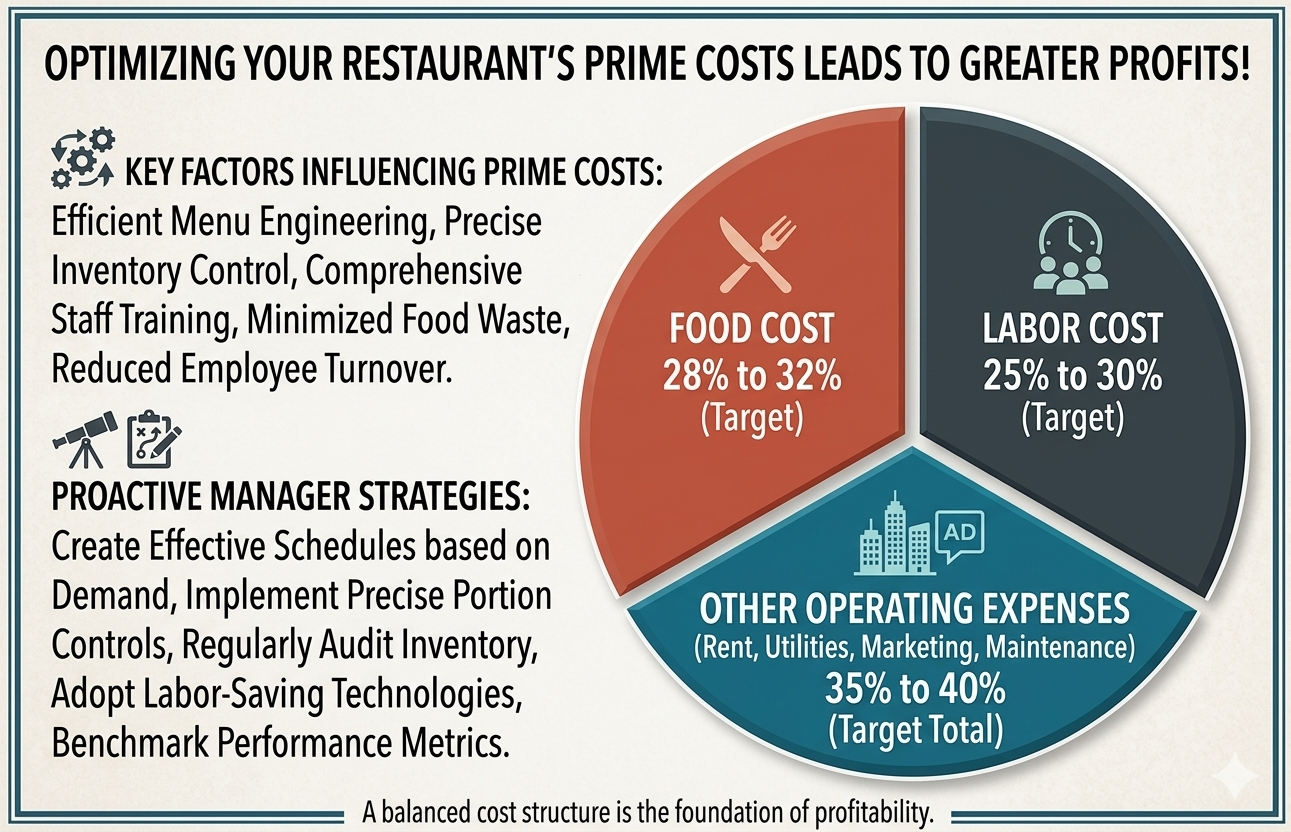
Prime cost combines the cost of goods sold and labor. These are two main areas that can be swiftly moved in a restaurant. The data provided by the Bookkeeping Chef reveals that prime costs typically account for 60% of sales in restaurants.
Think about a situation where sales aren’t even changing and the costs of primary production are increasing. This alone won’t be the solution. This gives the person in charge an excuse to do some digging.
Have the hourly wages increased? Did overtime happen? Costs of food changed? The invoice of a vendor was unusually high. Did the sales mix change?
It’s better to know about the problem now before it gets worse.
Automate the repetitive work
DIY bookkeeping does not need to be a manual process of transferring POS (point of sale) totals into spreadsheets.
Modern bookkeeping automation for restaurants can manage a lot of the routine transfer of financial information. It connects to various systems, including POS and QuickBooks, payroll, vendor platforms inventory management and recipe management as well as AP/payment tools.
The aim is not to automate to achieve its own ends.
This helps to cut down on the manual data entry. This also helps keep the financial records up-to-date so that owners are able to focus on looking over information instead of gathering it.
This creates a new model of bookkeeping in restaurants. The system is able to handle more of the mechanics, while the owner is still involved with the financial implications.
P&L Questions: Find out How to Ask Better Questions
Stop looking at your P&L as if it were an accounting test.
Begin by taking a look at the number of sales. Then look at the costs required to produce the sales. Compare the food and beverages performances. Think about the labor. See the work.
Check out the various periods.
If profits increase, but sales aren’t, there’s a change between the two. Find out what happened in the operation if food costs increased. Examine the staffing levels and sales activities if the labor percentages have changed. Examine if the number appears unusual, rather than believing that the restaurant went through a bad period.
Bookkeeping Chef provides monthly P&Ls within five days. This lets owners review the latest performance without waiting for financial statements that often arrive months later than the close of an operating period.
For owners searching bookkeeping restaurant solutions, speed is useful but understanding is the bigger objective.
You don’t need to be a pro when you make it DIY
There is no need to be your own bookkeeper full-time in order to avoid giving the entire financial responsibility over to another person.
You can be involved as an owner of a business without having to perform every accounting task manually.
That might mean the use of automated system connections in order to keep information flowing, reviewing a weekly prime-cost report, analyzing the monthly P&L and asking questions in the event of an unexpected change.
Specialized restaurant bookkeeping services can assist in maintaining the book’s structure and helping the restaurant owner know what the reports mean.
The result is not a bookkeeping owner who is able to do every bookkeeping function.
Owners who are able to be able to sit down and discuss intelligently about their company with the P&L are more likely to succeed.
The aim is financial independence Not more reports
Restaurants are a major source of information. The other dashboards aren’t necessarily useful.
The real value is when an operator is able to look at a weekly report on the prime cost and notice that something was different, then look at the P&L and know the next steps to take.
Bookkeeping Chef’s method integrates restaurant accounting automation with daily reports, monthly P&Ls and specific financial assistance for restaurants to make this process possible.
Automate repetitive tasks. Check the primary cost every week. Know the language used within your P&L.
You do not have to be an accountant.
You must be a successful owner who knows the financials of your own restaurant.